Linen is considered high-maintenance. That's true—but not in the way most people think. The most common mistakes are not too much attention, but wrong reflexes: washing too hot, spinning too long, throwing it in the dryer. If you avoid these, linen clothing requires little effort.
Linen is a natural fiber made from flax plant stems. It is naturally antibacterial, moisture-regulating, and significantly more durable than cotton—provided it is treated correctly. Linen gets softer with each wash. This is not a loss of quality, but a material promise.
What distinguishes linen from other natural fibers
Flax grows with little irrigation. The fiber it produces is hollow—which makes linen so breathable. In summer, it quickly wicks heat away from the body; in autumn, it insulates better than expected. In addition: linen absorbs moisture without feeling damp and releases it quickly.
In practice, this means: linen clothing does not need to be washed after every wear. Airing is often sufficient. Washing linen items too often unnecessarily stresses the fiber.

Pure linen fabrics are firmer and more prone to wrinkling than blends. Many garments today combine linen with viscose: this makes the fabric softer, more drapey, and less prone to wrinkles—but requires even gentler care, because viscose is fragile when wet.
Washing linen – temperature, program, no-gos
The basic rule: 30°C, delicate or fine wash cycle. For dark linen items, 20°C cold wash is better—high temperatures dissolve color pigments.
Turn items inside out before washing. This protects surfaces, seams, and any prints.
Spin speed: maximum 600–800 rpm. Strong spinning presses permanent creases into the fiber that are difficult to iron out.
Fabric softener: avoid. It forms a film on the linen fibers, reduces their breathability, and creates an artificial softness that distorts the fabric's natural wearing feel. Linen softens naturally with every wash—it doesn't need help.
Do not wash with heavy fabrics: jeans, thick towels, or bedding create too much friction in the drum.
Drying – why the dryer is not an option
Linen shrinks with heat. In the dryer, it contracts, the fibers become brittle, and loss of shape is permanent. This also applies to linen-viscose blends: the Suite13Lab Danli Jumpsuit (55% linen, 45% Livaeco-viscose) explicitly states "not suitable for tumble drying" on the care label.
Instead: pull the still damp item into shape and dry flat or on a hanger. Not in direct sunlight—UV radiation bleaches colors. Linen dries quickly, so the waiting time is manageable.

A linen dress dried hanging will have hardly any wrinkles after drying. If the fit was right during drying, it often doesn't need ironing.
Ironing – and when you can skip it
Linen wrinkles. This is not a malfunction, but a material property. If you want a smooth look: iron the item slightly damp, medium setting (two dots on the iron), always from the inside out or with an ironing cloth in between. Never iron directly on prints, embroidery, or decorative details.
If you wear linen items in everyday life, you can skip ironing. The wrinkle structure is often a stylistic feature in good cuts, not a flaw. The ARMEDANGELS Maaholina Lino dress (74% LENZING™ ECOVERO™ viscose, 26% linen) wrinkles less than pure linen anyway due to its high viscose content—and looks well-groomed even without an iron.
Storing linen and caring for it between washes
Do not store linen tightly compressed. Folded linen can be placed in cotton bags—plastic does not allow the fiber to breathe. If you have space, hang linen items.
Between washes: air it out. Fresh air is often enough to neutralize odors. Treat stains immediately with cold water—hot water permanently sets stains in linen fibers. For stubborn spots: let a gentle stain remover soak in briefly, then wash by hand.
For linen clothing made from good materials, it is worthwhile to reduce washing to a minimum. Fewer machine washes mean a longer lifespan—this applies to linen more than most other fabrics.
Conclusion with internal links
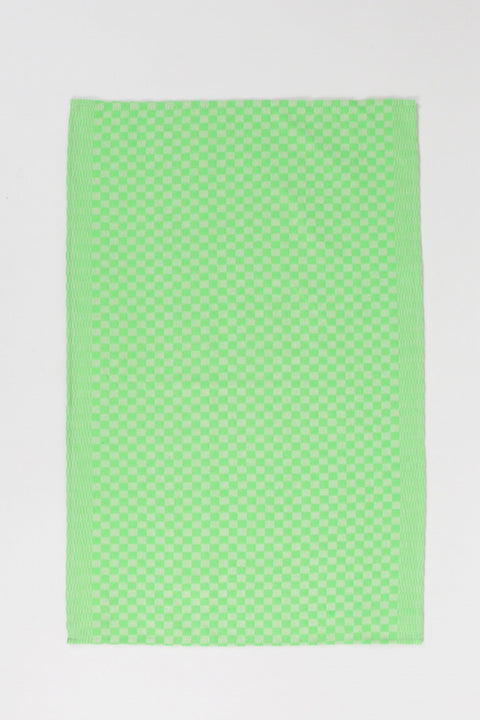
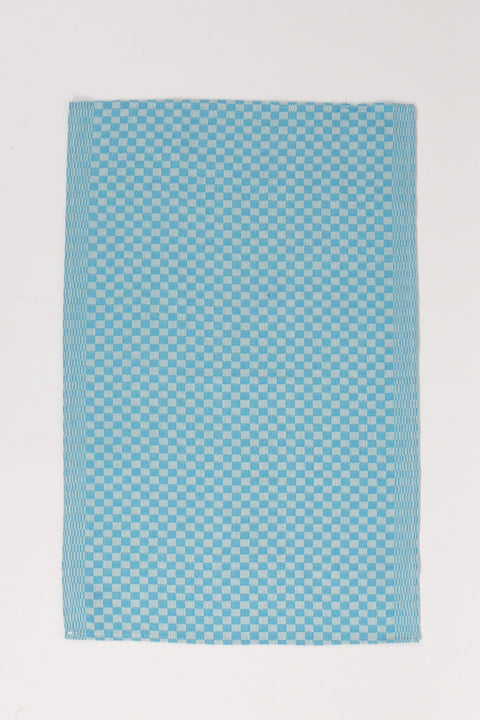
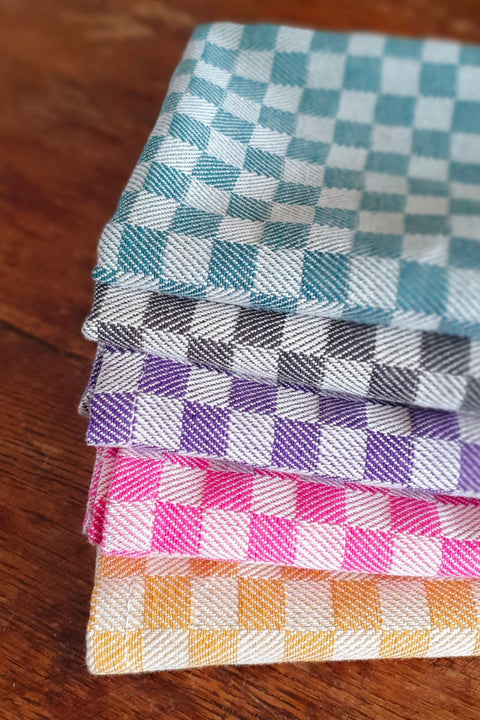
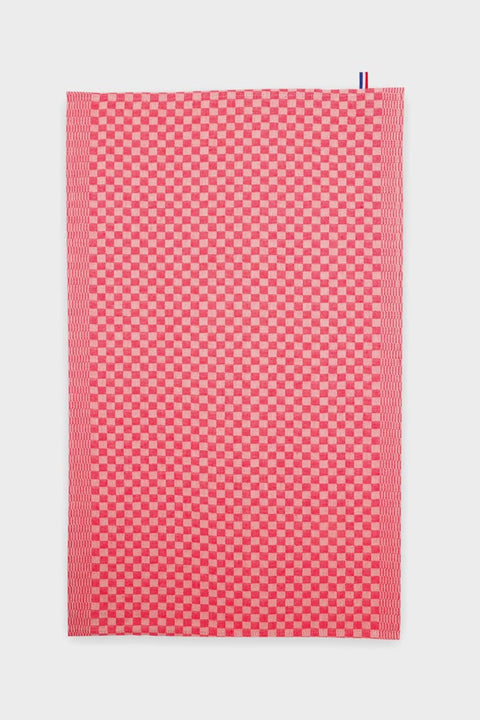
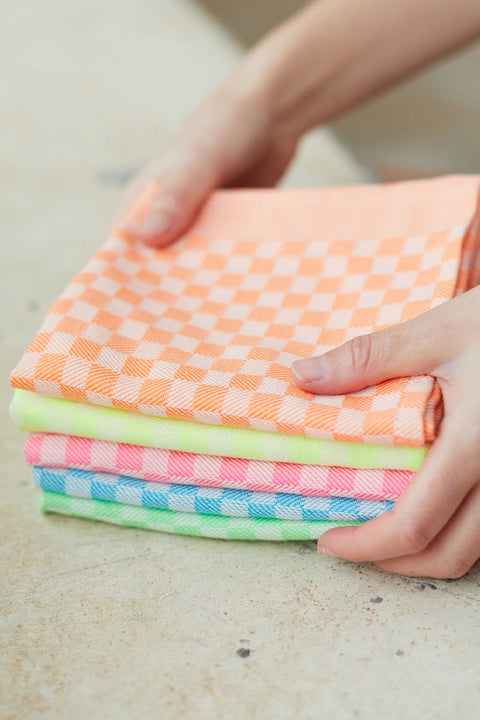
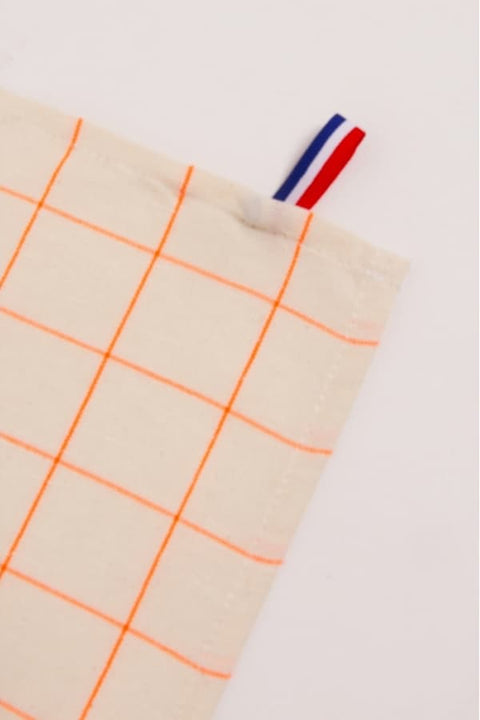
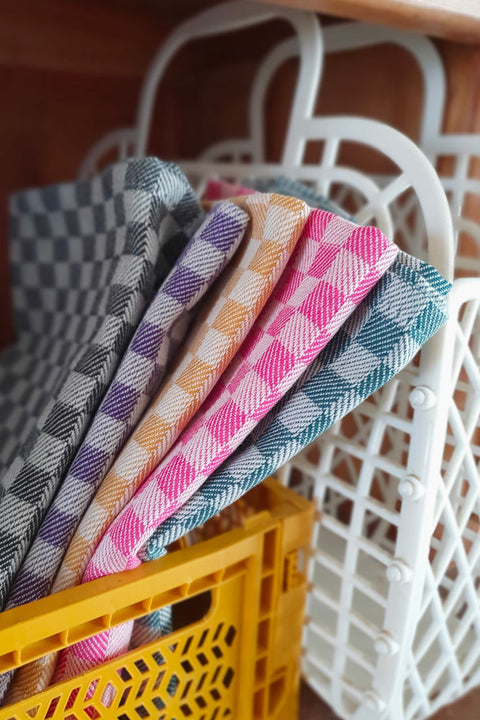
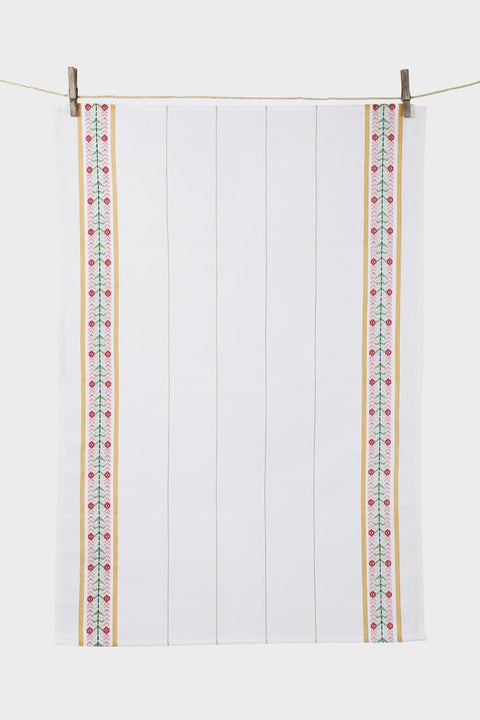
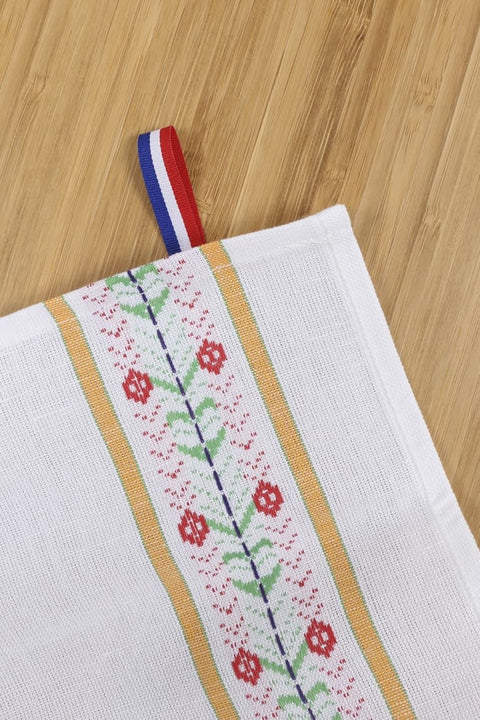
Dresses and jumpsuits made of linen and linen blends can be found in the Dresses & Skirts and Pants & Jumpsuits collections. Linen textiles for the kitchen—dish towels and napkins in cotton-linen blend from Tissage de l'Ouest—are in the Home Textiles category.
FAQ
At what temperature should linen clothing be washed?
30°C on a delicate or fine wash cycle. For dark items, 20°C is better to avoid color loss. Washes above 40°C can lead to shrinking and fiber hardening.
Can linen clothing be tumble dried?
No. Linen shrinks with heat and becomes brittle. Dry linen items flat or hung at room temperature—always pull them into shape while still slightly damp before hanging.
Why does linen wrinkle so much?
The linen fiber is stiff and has little elasticity. This leads to wrinkle formation under mechanical stress—washing, wearing, sitting. Linen-viscose blends wrinkle significantly less. If you don't want wrinkles, iron the item slightly damp on a medium setting.
Does linen clothing shrink when washed?
Hardly at 30°C and a delicate wash cycle. Pre-washes can cause slight shrinkage, which stabilizes after the second or third wash. Hot water and the dryer are the main causes of permanent shrinkage.
How often should linen clothing be washed?
Less often than most people think. Linen is naturally antibacterial and releases moisture quickly. After wearing, airing is usually enough. Wash only with visible stains or after intense physical activity.
Can I wash linen with other fabrics?
In principle yes, but not with heavy fabrics like jeans or terry towels—too much friction damages the linen fiber. It is best to wash with similarly delicate fabrics in the same temperature range.